A step change in services…

Or “the importance of operations…”

Both ATP and the Talk Show spent a long time this week discussing how Apple has managed to make a step change in app review times in less than a week. Review times have dropped overnight from about a week to less than a day. Everyone is busy guessing how and why?

First, the original state of the service was odd. For the last five years reviews have taken about a week. This has been stable; summer and winter, year after year. There is no obvious reason why. There must be some change in the number of requests for review but the output has been constant. My guess is that this is an example of Parkinson’s Law, there is some service level set at about a week and the team has managed to that level.

So how did they break the performance levels of the last five years in less than a week?

Changes of this magnitude are normally made by changing one of three things:

  • Process
  • Policy
  • People

In both podcasts they concentrated on Process, especially the possibility that there has been added automation. Some new tool that has suddenly made a step change. However…

Normally to get the best out of new tools and automation, there also has to be a change to policy. Policy needs to be simplified so that the machine can make a difference. Negotiating the policy change in a massive organisation the size of Apple must be a nightmare.

Finally, People. This is where I think the timing is important. Tim Cook is in India this week, wandering around opening centers and talking about the importance of India to Apple. I’d love to know if in all of this some part of the App Review process has been moved to India. There is an army of people doing these operations and India is the place where services are now done on this scale.

I’m willing to bet that Apple has made changes on all three axis to pull this off and sadly we’ll never know the details.


The two phone problem…

Or put another way. Where Microsoft went wrong with Nokia.

Like millions of people I have two phones. One for “work” and one for “home”. The “home” phone has my diary, contacts, music, email, RSS reader, YouTube and a million other things. I rarely use it to make a call.

Now here’s the interesting thing. What do I want from my work phone? Well I want to make calls and I want access to my Outlook contacts. Nothing more. That’s it. I’d pay a premium for a “clunker” that accessed my contacts and had a battery that lasted a week. If one exists, I’ve not found it.

I also have a third phone. It’s an old iPhone 4 that I use in the pool so that I can swim with podcasts. I’d pay for a simple waterproof phone that did the basics of music and health monitoring and nothing else. I’ve not found it, so I use an old iPhone in a waterproof case.

This was Nokia’s market. The second and third phones. Instead they went for the iPhone market. Homerun or bust. Sadly it was a bust.

Nokia was Microsofts way into the IoT. From the third phone they could have gone to connected objects, home monitoring, and back to SmartPhones later.

Interestingly Nokia seems to have understood better than Microsoft and have now bought Withings. I step on my Withings scales every morning. One of the best products that I own. I’m hopeful that at the third attempt they may get this right.

Tech Tree for the modern corporation…

A standard part of game design is the Tech Tree; or the skill tree. Of course, the tech tree is more or less complex depending on the game, the one below is from Civilisation, which as the name suggests is all about getting your team up the tree as quickly as possible.

civ4techtree92005vanilla_original

So how does this help the modern corporation? Well, consider that most companies need to decide where they’re going to put their R&D dollars, can partner themselves into complete branches of the tech tree and more importantly have little idea of the technologies that they need.

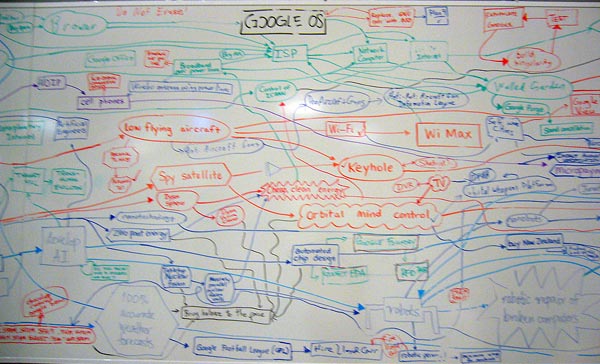
Google understood this early with the legendary map of google future…

google_whiteboard

Of course, having access to a technology is also only part of the problem. The organization also needs to be able to exploit, produce and benefit from it. That’s a matter of training, tools and investment.

So apart from Google, where are the technology maps. What does it look like for an insurance company, or a pizza resturant?

I may spend a few hours translating the Gartner hyper curve into a Tech Tree!!!


Maker Faire Paris: Time for a reboot?

Many, many years ago I attended the early Le Web conferences. You can find some old blog posts here. It was an interesting experience that initially I loved, I’d get on my bike and head over to Loïc’s strange world, be battered by an unexpected mix of silcon valley, TED, bloggers and a man in a kilt for eight hours and then head home to think it over.

Over time something changed and it stopped being about the web and the tools. It started being about how to get money from investors. The low point was a talk by Brian Cox, he’s worth listening to, but we could hardly hear him above the drone of deals being made in the cafe.

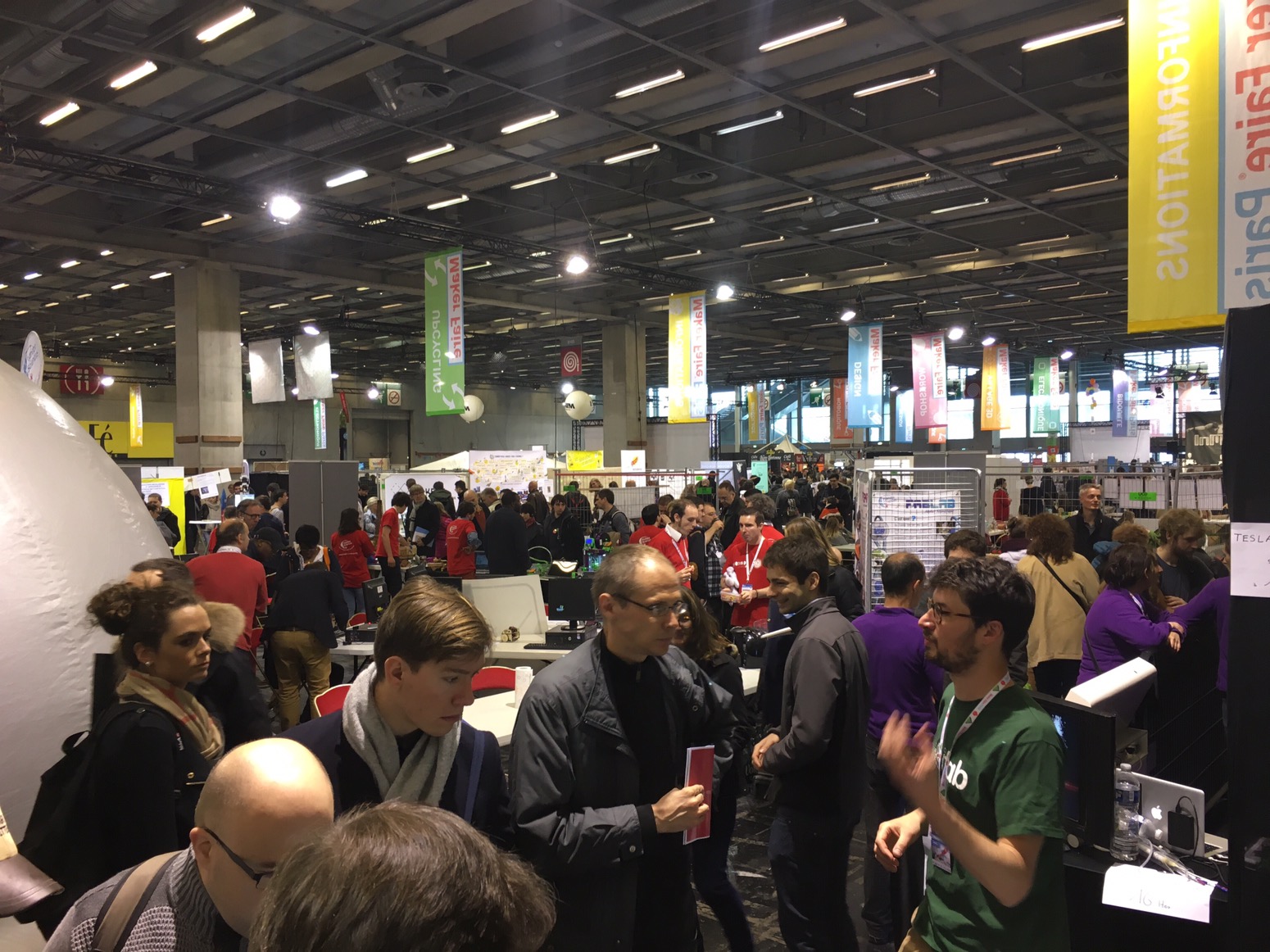
The Paris Maker Faire seems to have hit the same issue but in a different way. Last year they moved to the Foire de Paris. This has a host of advantages, larger space, more visitors and a higer profile.

However, something has been lost in the process. The additional people are not Makers and are more like tourists. Every year, it’s a new flow and therefore the sense of progression has been lost.

The Solution? I think that we need a second Paris Maker Faire. Smaller and more specific, somewhere where we can start making progress together. Somewhere with enough time and space to talk and discuss.

Of course, needing a second Faire is already progress of sorts!


Watch a river change its path…

landsat-river

“Landsat imagery of the Ucayali river in Peru shows it meandering over a period of several years; an oxbow lake forms, islands grow and fade in the channel, and a smaller river is “eaten”…”

Watch a river change its path over the years / Boing Boing

And, we’re back…

The last real blogging on this site was a number of years ago. I’ve mainly been quoting and posting photos since. The main reason for the pause was the “Social Media” policy of my employer at the time.

I’ve since changed employer, to one who has a different policy.

So it’s time to start again. Let’s see how long I keep this up this time!

Finally…

St George’s Hall, Liverpool

“For at the risk of invoking some of the many slurs thrown at both us and the city of Liverpool over the years, I feel I need to say that while it is an unpalatable truth for a portion of the population and one that they would really rather not hear or accept, it is the shameful truth that for the vast majority of the past 27 years, we the families, the survivors and the fans, were systematically and maliciously bullied, intimidated, manipulated, lied to and lied about. We were used for personal and political gain, marginalised and publicly vilified by those in our country who were placed in positions of power and influence, which were primarily designed to support, protect and administer our fundamental rights.

It is no exaggeration, therefore, to say that for most of the families, lives have been irreparably damaged. People have suffered illness and trauma, brought on by years of ongoing stress. Hillsborough has permeated our lives to such an extent that we now no longer have any idea of the people we would have been without its influence.”

How are we, the Hillsborough families, still standing? We took the power back | Julie Fallon

Random thoughts…